Pig Momma Farm Animal Livestock
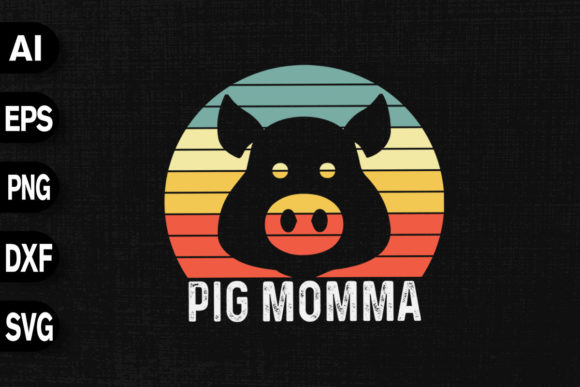
As someone who’s stitched hundreds of designs—from nursery samplers to boutique sweatshirts—I opened Pig Momma Farm Animal Livestock expecting charm, but what stood out immediately was its quiet confidence. It doesn’t shout. It smiles—warm, grounded, and gently rustic. The pig sits centered, round-bellied and content, with soft curves, minimal line weight, and just enough detail in the snout and ears to read clearly at 3–4 inches tall. No fussy flourishes, no overcrowded elements. Just one friendly, farm-fresh momma pig, designed to feel handmade—not mass-produced.
Last week, I used Pig Momma Farm Animal Livestock for a custom embroidered canvas tote bag destined for a local farmers’ market vendor. She sells pasture-raised pork and wanted something that felt authentic—not cutesy, not cartoonish, but rooted. We stitched it on natural unbleached cotton canvas, using matte cotton thread in warm taupe and cream. The result? Instant recognition, gentle humor, and zero visual fatigue. Customers paused, smiled, and asked where she got it. That’s the power of a well-judged design: it earns attention without demanding it.
This isn’t a design built for high-detail embroidery on delicate silk or tight-coverage satin stitch work. It’s made for real-world use—on sturdy cotton tees, loopback sweatshirts, linen tea towels, denim aprons, and baby-soft organic cotton onesies. Its clean silhouette holds up beautifully in machine embroidery design form, especially when scaled between 2.5" and 5". At smaller sizes (under 2"), the snout and eye details soften—but that’s not a flaw; it’s intentional versatility. On a baby cap or tiny pillow cover, that slight abstraction reads as sweet, not vague.
I’ve seen too many T-Shirt Designs fail under wear: thread nests in tight corners, fill stitches pucker on stretchy fabric, or lettering vanishes after three washes. Pig Momma Farm Animal Livestock avoids those traps. Its open negative space lets stabilizer do its job. There’s no dense cluster of satin-stitched curves that’ll torque fabric or snag in washing. The outer outline is generous—not razor-thin—so running stitch edges stay crisp even on textured fabrics like terry cloth or brushed fleece. And because it’s a single-motif graphic (no layered applique or interior text), it eliminates alignment headaches during hooping.
That said, be thoughtful about placement and substrate. On dark fabric, test contrast first—especially if stitching with light ecru or oatmeal thread. A mid-tone grey or charcoal works more reliably than pure black for depth without muddiness. On curved surfaces like baseball caps, avoid placing the full design across the crown seam—center it over the front panel instead. And skip ultra-thin knits unless you’re using lightweight tear-away + cut-away combo stabilizer. This isn’t a design that forgives poor stabilization—it rewards intention.
For Etsy sellers and small shop owners, Pig Momma Farm Animal Livestock is quietly strategic. It bridges niches: farm life lovers, moms of little ones, sustainable lifestyle shoppers, and cottage-core enthusiasts—all without leaning into trend fatigue. Unlike overly literal livestock motifs (think anatomically precise pigs with barnyard labels), this one breathes. It leaves room for your brand voice: pair it with hand-lettered “Rooted & Raised” on a kitchen towel, or let it stand alone on a minimalist apron. That flexibility makes it strong design assets for multiple product lines—tote bags today, holiday gift tags next month, nursery wall hangings come spring.
As an embroidery designer, I also appreciate how cleanly it translates to digital mockups. Whether you’re building a printable mockup for your Etsy listing or prepping a client presentation, Pig Momma Farm Animal Livestock scales evenly, retains shape integrity, and converts well to grayscale—critical when checking value contrast before stitching. I ran it through black-and-white conversion twice: once for light fabric, once for dark. No detail vanished. No stroke collapsed. That’s a sign of mature digital embroidery file construction—not just vector art slapped into an embroidery workflow.
Here’s what I always do before committing Pig Momma Farm Animal Livestock to a finished product:
- Test on scrap fabric—same type, same color, same stabilizer I’ll use for the real piece;
- Check thread color contrast on both light and dark backgrounds, not just digitally;
- Review stitch density visually in my editing software—no hidden over-stitching in the belly curve;
- Confirm hoop size compatibility with my smallest standard hoop (I use 4x4”, so anything wider needs re-hooping);
- Inspect small details at 200% zoom—especially the inner ear curve and snout tip;
- Run a black-and-white mockup to verify readability at intended size;
- Compare performance on cotton vs. polyester blend—thread tension shifts noticeably;
- Use proper stabilizer—cut-away for knits, tear-away for stable wovens, and fusible for lightweight linens;
- Verify licensing terms before selling finished items or bundling the file in digital product packs.
One final note: Pig Momma Farm Animal Livestock shines brightest when treated like a trusted collaborator—not just a graphic to slap on fabric. It invites warmth, familiarity, and subtle storytelling. That’s why it works so well on personalized gifts (a new pig-farming couple’s anniversary towel), boutique branding (a small creamery’s staff aprons), and holiday embroidery (a linen stocking with a single centered pig). It doesn’t try to be everything. It simply does one thing, very well: represent grounded joy, in thread.
If you're a craft business owner weighing whether this fits your aesthetic—or an embroidery designer sourcing reliable Graphics for repeat client work—trust your instinct here. This isn’t flashy. It’s functional, friendly, and quietly memorable. And in handmade product markets, that kind of consistency builds customer trust faster than any trend ever could.